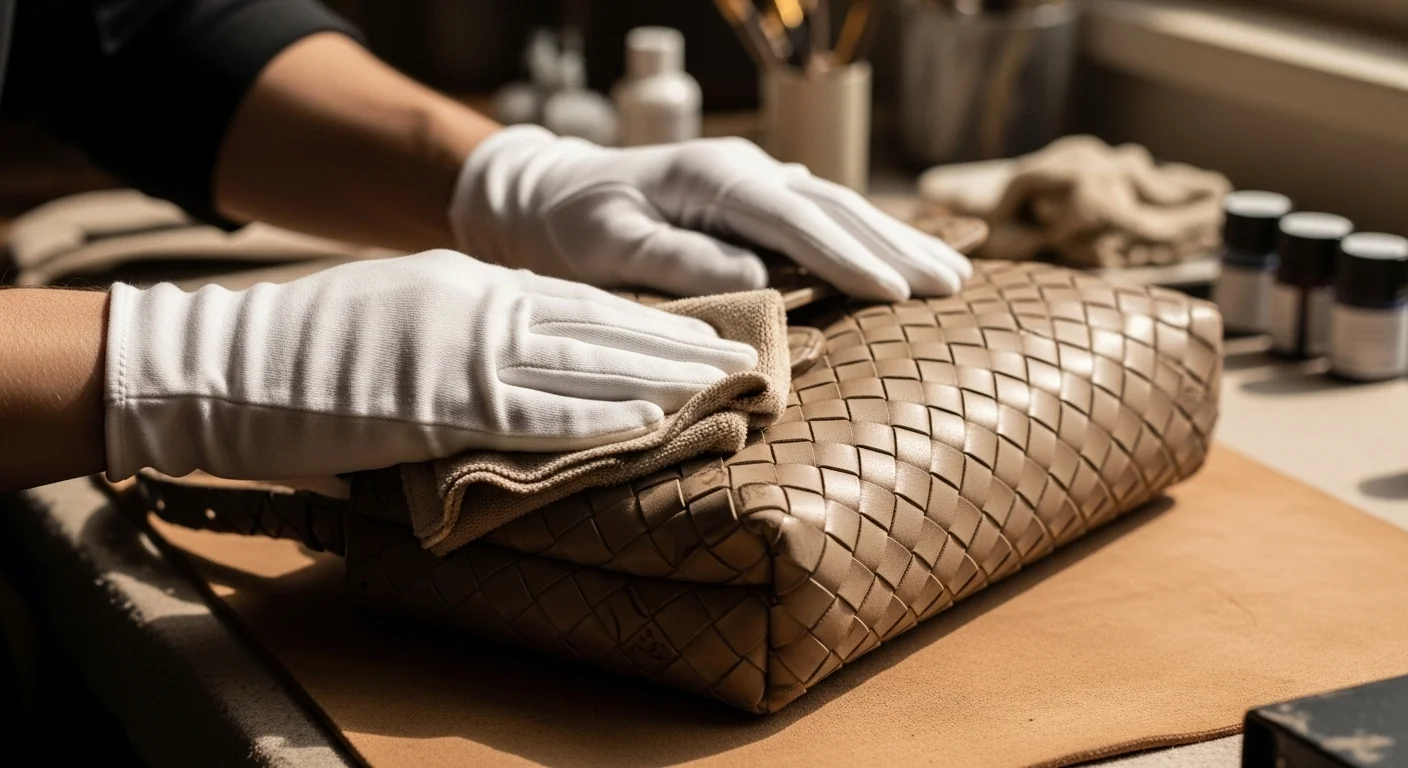
The sudden appearance of fungal spores—manifesting as white powdery mildew or aggressive black mould—signals a critical failure in storage conditions. This is not merely an aesthetic issue; it is the early stage of biodegradation. The fungi are actively feeding on the tannins, fatliquors, and protein fibres that give the leather its strength. If left unchecked, this leads to irreversible dry-rot and scarring.
This technical guide differs from generic cleaning advice. It focuses on an archival-grade protocol for arresting fungal growth, neutralizing the spore colony, and restoring the pH balance of the leather without compromising its finish.
1. Clinical Identification: Mildew vs. Deep Mould
Understanding the severity of the infestation is critical to determining the restoration approach. Fungal growth on leather typically presents in two distinct biological forms:
Surface Mildew (Aspergillus / Penicillium)
Appearance: A fine, white or greyish dust that sits atop the grain. It often
resembles talcum powder.
Pathology: This is surface-level growth feeding on surface dust or film. It
typically has not penetrated the dermis.
Prognosis: Treatable with the Neutralization Protocol below.
Deep-Set Aggression (Chaetomium)
Appearance: Sticky black spots, fuzzy green circles, or bright orange
patches.
Pathology: These aggressive colonies have rooted deep into the fibrous structure.
They are digesting the collagen.
Prognosis: Critical. DIY removal may result in "shadow stains" where
pigment has been consumed. Professional ozone treatment is highly recommended.
Hidden Danger: The Interior Lining
Mould often begins inside the bag, feeding on crumbs, cosmetic spills, or gum residue. Inspect the lining carefully. If the lining is fabric (cotton/satin), it is more porous than leather and holds odors tenaciously. If it is leather (chevre/lambskin), treat it with the same delicacy as the exterior.
2. The Bio-Remediation Toolkit
Conventional household cleaners (bleach, ammonia, baking soda) are highly alkaline (pH 11+). Leather is naturally acidic (pH 4.5–5.0). Using alkaline cleaners causes "alkali burn," destabilizing the fibers. You require a pH-balanced approach.
- Acetic Acid Solution (The Gold Standard): Distilled white vinegar diluted with distilled water (1:1 ratio). Its mild acidity (pH ~2.5) helps neutralize the alkaline byproducts of mould without damaging acid-stable tans.
- Isopropyl Alcohol (70%): Use with extreme caution. Effective for killing spores on spot treatments but highly drying. Never use on unfinished leather.
- Saddle Soap: Good for the final wash, but not the primary fungicide. It cleans debris but may not kill deep spores.
- N95 Mask & Gloves (Nitrile): Essential protection against inhaling mycotoxins.
- Soft-Bristle Horsehair Brush: For mechanical removal of spores without abrading the grain.
- HEPA Vacuum: To extract spores from interiors and pockets.
- Microfiber Cloths: High GSM cloths to trap spores rather than spread them.
- Lipid-Rich Conditioner: To replenish fatliquors stripped during the acidic cleaning process.
3. The Restoration Protocol
Perform this sequence with rigorous operational discipline.
Phase 1: Mechanical Decontamination
Move the item to an outdoor area with strong airflow. Using the dry horsehair brush, gently disjoint the colony from the surface. Brush away from yourself. Disassemble any removable hardware to ensure no spores remain trapped in crevices.
Phase 2: Chemical Neutralization
Moisten a microfiber cloth with the acetic acid solution. Wring it until almost dry. Methodically wipe the entire surface area, not just visible spots, to lower the surface pH to an environment where fungi cannot survive.
Technical Note: For delicate aniline or unfinished leathers (like Louis Vuitton Vachetta), perform a spot test on the inner base. If the leather darkens excessively, consult a specialist immediately.
Phase 3: UV Sterilization (Controlled Drying)
Suspend the bag in a shaded, breezy area. While UV light is a potent sterilizer, direct heat causes shrinkage. Allow the bag to air-cure for 24–48 hours. This ensures the acetic acid fully evaporates, taking the fungal odor with it.
Phase 4: Interior & Hardware Decontamination
For Fabric Linings: Pull the lining out if possible. Vacuum thoroughly with a HEPA
filter attachment.
Sponge gently with the acetic acid solution, but do not soak. Allow to dry completely.
For Hardware: Mould causes oxidation (verdigris) on brass and gold plating. Use a
cotton swab dipped in the acetic solution to clean crevices around zipper teeth and buckles.
Phase 5: Lipid Restoration (Crucial)
The neutralization process inevitably strips some natural oils. To prevent brittleness, you must reintroduce high-quality fats. Apply a premium leather conditioner using circular motions. This creates a hydrophobic barrier against future moisture.
4. Material-Specific Variations
The standard protocol above applies to pigmented (finished) dry leathers. Other materials require modified approaches:
Option A: Suede & Nubuck (Dry Remediation Only)
Do NOT use liquid solutions. Water will permanently stain the nap.
1. Use a crepe brush to mechanically lift spores.
2. Use a specialized "suede eraser" block to rub away mildew spots.
3. If deep mould exists, do not attempt DIY. You need professional steam cleaning.
Option B: Patent Leather
Patent leather has a plastic coating. You can safely use a slightly stronger solution of Isopropyl Alchol (diluted 1:1 with water) on the surface, as it won't penetrate the leather. Wipe immediately with a damp cloth to prevent clouding.
Option C: Coated Canvas (Louis Vuitton / Goyard)
These are durable and can withstand the standard Acetic Acid protocol. However, avoid hitting the leather trim ("Vachetta") with vinegar, as it will spot.
5. Neutralizing Deep-Set Odors
A persistent musty odor indicates mycelium (fungal roots) have penetrated the internal fillers.
- Activated Charcoal / Silica Gel: Place activated charcoal sachets or a generous amount of silica gel packets inside the closed bag for 72 hours. Charcoal's porous structure traps volatile organic compounds (VOCs).
- Ozone Therapy (Professional): The most effective method is Ozone (O3) treatment. An ozone generator oxidizes the cell walls of the fungus, effectively sterilizing the item at a molecular level without wetting it.
6. Archival Preservation Strategy
Preventing recurrence requires a shift from simple storage to active preservation.
1. The "Zero-Plastic" Rule: Never store leather in plastic. It creates a
micro-climate of condensation. Use breathable cotton dust bags.
2. Climate Control: Maintain a closet Relative Humidity between 40% and 55%.
In
humid regions, use electronic dry cabinets (for high-value collections) or disposable dehumidifier
boxes (like Absorbia).
3. Silica Maintenance: Place 2-3 silica gel packets inside each bag.
Crucial: Change them every 3 months.
Saturated silica releases moisture back into the bag.
4. Air Exchange: Rotate your collection. Taking bags out every 60 days
prevents
the air stagnation that spores require to settle.
"Restoration is not just about cleaning; it is about respecting the chemistry of the material. A treated bag should essentially be biologically reset."
7. When to Commission a Specialist
Certain scenarios dictate professional intervention to preserve the asset's value:
- Complex Leathers: Suede, Nubuck, and exotrics are easily ruined by liquid solutions.
- Pigment Damage: If the mould has eaten the dye, professional recoloring is required.
- Structural Compromise: If the leather feels stiff or "cardboard-like," the internal collagen structure has degraded.
At The Leather Restorators, we employ a multi-stage bio-cleaning process involving controlled ozone chambers and nutrient-dense oil restoration.
Professional Bio-Cleaning Service
Preserve your investment. Book a consultation for expert fungal remediation.