The Art of Preserving Louis Vuitton
Louis Vuitton bags are synonymous with luxury, durability, and travel. Since 1854, the maison has crafted pieces intended to last a lifetime—and often, they do. From the iconic Speedy to the structured Capucines, these bags are designed to weather the world with you. However, "durable" does not mean "indestructible."
Daily exposure to sunlight, hand oils, city pollution, and unexpected spills can take a toll. The Vachetta leather darkens unevenly, the brass hardware oxidizes to a dull green, and the canvas loses its signature sheen. Cleaning a Louis Vuitton bag is not just about hygiene; it is a ritual of preservation. It is about honoring the craftsmanship that went into every stitch.
This guide serves as your comprehensive handbook for 2026. We will walk you through the nuances of identifying materials, the specific tools you need (and the ones you must avoid), and a detailed, step-by-step procedure for every part of your bag. Whether you are a seasoned collector or a first-time owner, this knowledge is essential for keeping your investment pristine.
Understanding Your Bag: A Material Breakdown
Before you even think about reaching for a cleaning solution, you must identify what your bag is made of. Louis Vuitton utilizes a variety of materials, each requiring a distinctly different approach. Treating Vachetta leather like Coated Canvas can be a disastrous mistake.
1. Coated Canvas (Monogram, Damier Ebene, Damier Azur)
Contrary to popular belief, the famous LV Monogram and Damier patterns are not printed on leather. They are printed on Egyptian cotton canvas which is then coated with a layer of PVC (Polyvinyl Chloride). This makes the material incredibly durable, water-resistant, and scratch-proof. However, it can crack if it dries out over decades, and the print can fade with aggressive scrubbing.
2. Vachetta Leather
This is the untreated cowhide leather found on the handles, piping, and trim of Monogram and Damier Azur bags. When new, it is a pale beige color. Over time, it oxidizes and absorbs oils to develop a honey-colored patina. This leather is extremely porous and sensitive to water, grease, and sunlight. It is the most difficult part of the bag to clean.
3. Epi Leather
Epi leather is a vegetable-tanned leather deeply dyed and stamped with a textured wave pattern. It is water-resistant and rigid, making it easier to clean than Vachetta, but it can suffer from scuffs and color wear at the corners.
4. Vernis Leather
Vernis (French for "varnish") is embossed leather coated with a patent finish. It is glossy and glamorous but notorious for color transfer. If a dark denim jacket rubs against a light Vernis bag, the dye can migrate into the patent coating permanently.
Pre-Cleaning Preparation
A successful cleaning session starts with the right setup. Rushing into the process with the wrong tools causes more damage than dirt itself.
The Essential Toolkit
- Distilled Water: Never use tap water; the minerals can leave spots on Vachetta.
- Mild, pH-Neutral Soap: A gentle baby wash or a dedicated leather cleaner. Avoid dish soap or detergents.
- Microfiber Cloths: You will need at least three—white or light-colored to avoid dye transfer.
- Soft-Bristle Brush: A horsehair brush or a very soft toothbrush for cleaning seams and zippers.
- Magic Eraser (Use with Caution): For specific stains on Vachetta (more on this later).
- Metal Polish: For brass hardware (like Brasso or Wenol), but use sparingly.
- Leather Conditioner: A high-quality, wax-free conditioner for Vachetta.
Empty your bag completely. Turn it upside down and gently shake it to remove loose dust and crumbs from the interior. Use a lint roller to pick up fine particles from the lining.
Step-by-Step Cleaning Guide
Step 1: Cleaning the Coated Canvas
Since the canvas is durable, this is the safest place to start. Your goal is to remove the layer of dust and grime that dulls the pattern.
- Mix a small amount of mild soap with distilled water.
- Dampen a microfiber cloth in the solution. Wring it out thoroughly—it should be damp, not wet.
- Wipe the canvas gently in circular motions. Focus on the bottom and the back of the bag, where friction occurs most.
- For the textured grain of the canvas, you can use a soft damp brush to gently lift dirt from the crevices.
- Immediately wipe away any soap residue with a fresh damp cloth (water only).
- Dry the canvas with a dry towel. Do not let water sit on the surface.
Step 2: The Delicate Art of Cleaning Vachetta Leather
Vachetta is the soul of a Louis Vuitton bag, but it is also its most vulnerable point. Water stains, hand oils (which turn handles black), and scuffs are common.
For General Cleaning:
Use alcohol-free baby wipes or a damp cloth with plain distilled water. Wipe the entire
leather surface swiftly and evenly. Do not focus on one spot, as this can create a water mark. Wipe
edge-to-edge to blend any moisture.
For Water Spots:
If you have fresh water spots, dampen the entire surrounding area slightly to blend the stain into the
rest of the patina. As it dries, the line should disappear.
The Magic Eraser Method:
For stubborn stains or blackened handles, some enthusiasts use a Magic Eraser (melamine sponge). Dampen
it slightly and very gently rub the stained area.
Warning: The Magic Eraser is abrasive (like fine sandpaper). It removes the top layer of
the leather. While it removes stains, it also opens the pores of the leather, making it dry. If you use
this method, you MUST condition the leather immediately afterwards.
Step 3: Cleaning Straps and Handles
Handles absorb sweat and lotion, leading to a dark, sticky residue. To clean heavily soiled handles:
- Use a leather cleaner specifically formulated for untreated leather. Apply it to a cloth, not directly to the handle.
- Gently massage the handle. You will see dirt transferring to the cloth.
- Allow the handles to dry completely before touching them.
If the handles have turned a very dark black and feel sticky, the oils have penetrated deep into the fibers. In this case, surface cleaning will not work, and professional restoration is required to extract the oils.
Step 4: Brightening the Hardware
The golden brass hardware on older LV bags can tarnish to a dull brown or develop green verdigris.
Polishing: Apply a tiny dot of metal polish to a Q-tip. Carefully polish the
metal
parts (zipper pull, rivets, padlock). Be extremely careful not to get polish on the
leather or canvas—it will stain permanently. Buff with a clean cloth.
Zippers: If the zipper is stiff, run a piece of beeswax or parchment paper along the teeth to lubricate it.
Step 5: Cleaning the Interior
Interior linings vary. Canvas interiors can be pulled out (if not stitched to the bottom) and shaken. Alcantara (suede-like) linings hold onto dust; use a soft brush or a vacuum with a clean nozzle. For leather interiors, wipe with a damp cloth.
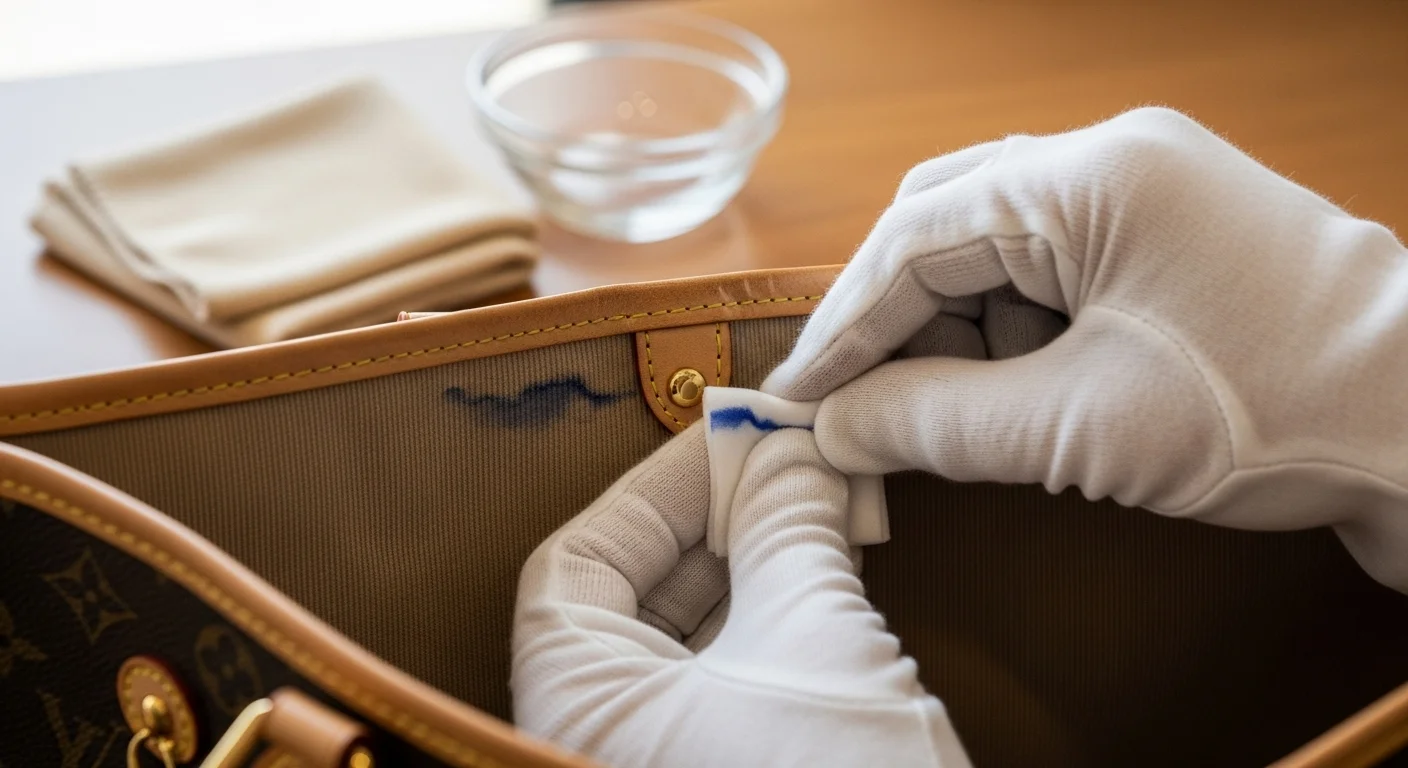
Ink Stains: Ink is the enemy. It is nearly impossible to remove from lining without spreading it. If you have an ink stain, consult a professional rather than trying DIY remedies like hairspray, which can melt the lining glue.
Post-Cleaning Care & Conditioning
Cleaning removes oils, so you must replenish them to prevent cracking. This is especially true for Vachetta.
Apply a thin layer of specialized leather conditioner. Avoid heavy, waxy products that can clog pores or darken the leather excessively. Buff it in gently and let it absorb. For the canvas, you can use a plastic conditioner or a dedicated canvas protectant to restore the subtle sheen and protect against future cracking.
"The goal of conditioning is not to make the leather look new, but to keep it alive. A well-nourished patina is the hallmark of an authentic, well-loved Louis Vuitton."
Storage: The Silent Killer
How you store your bag is just as important as how you clean it. Improper storage causes mold, deformation, and color transfer.
- Stuff It: Use acid-free tissue paper or a custom bag pillow to stuff the bag. This prevents creases and maintains the shape.
- Cover It: Always put the bag back in its original dust bag. Never store it in a plastic box or bag; leather needs to breathe. Plastic traps moisture and leads to mold.
- Climate Control: Store in a cool, dry place. Humidity is the enemy of leather. If you live in a humid climate like India, use silica gel packets, but ensure they don't touch the leather directly.
- No Hanging: Do not hang the bag by its straps for long periods, as this stretches the handles and distorts the leather. Shelf storage is best.
When to Call the Professionals
DIY cleaning is great for maintenance, but some issues require the skilled hands of an artisan. You should seek professional help if:
- Severe Cracking: If the canvas has cracked, it cannot be "healed" with cleaning. It needs structural repair.
- Deep Oil Stains: Dark, sticky handles need extraction, not just wiping.
- Piping Damage: If the leather piping on the corners is worn through to the plastic core.
- Mold/Mildew: Mold spores penetrate deep into the material. Wiping them off won't kill them; the bag needs ozone treatment and deep cleaning.
At The Leather Restorators, we specialize in the restoration of luxury leather goods. Our atelier uses museum-grade techniques to clean, repair, and restore Louis Vuitton bags to their former glory, preserving their value and your memories.
Frequently Asked Questions
Can I wash my Louis Vuitton bag in the washing machine?
Will Louis Vuitton repair my bag for free?
Can I use baby wipes on my bag?
How do I remove the "vintage smell"?
Need Expert Restoration?
For deep stains, repairs, or a full spa treatment, trust the experts at The Leather Restorators.