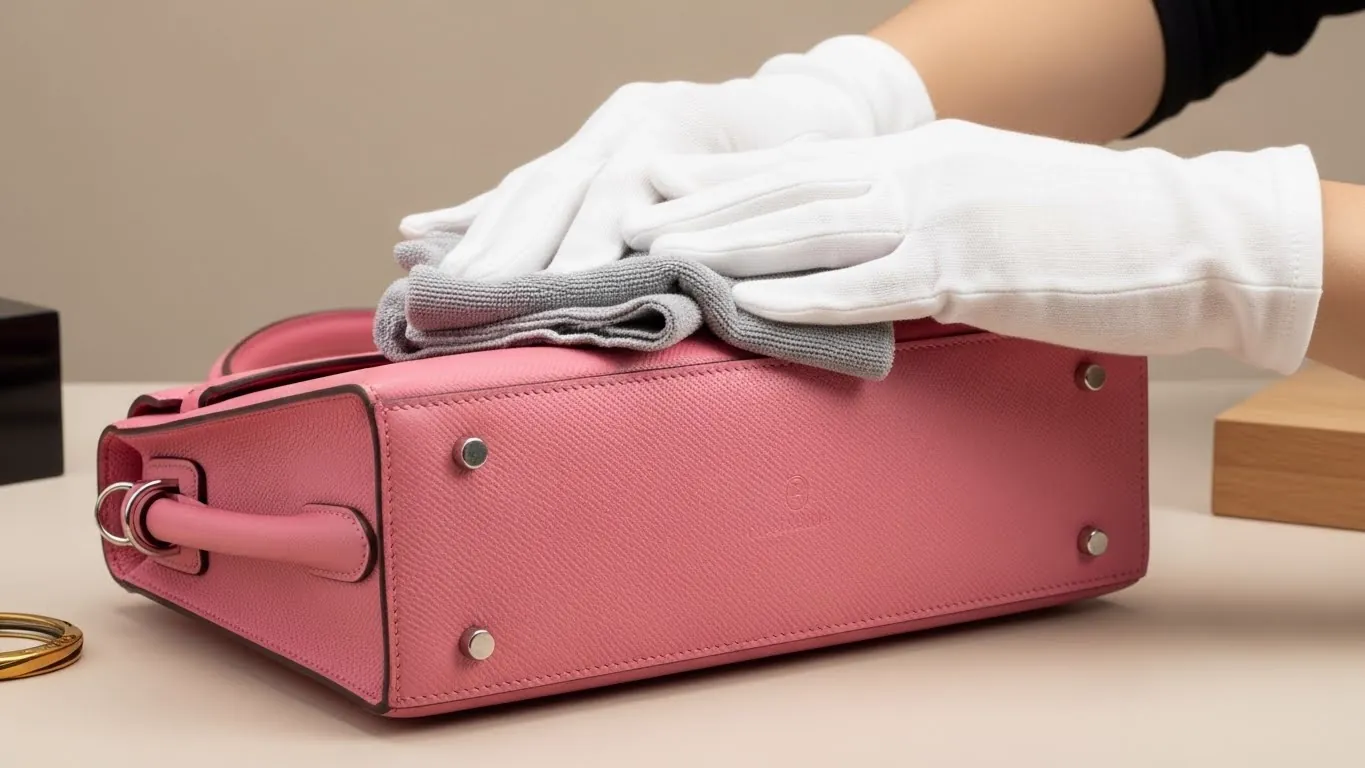
1. Material Science: Understanding Celine Leathers
Most luxury owners misdiagnose their leather. To restore a Celine, you must understand the tanning method used.
1.1 Box Calfskin (Historical "Liége")
The Physics: This is a chromium-tanned, full-grain calfskin that is "glassed." A
protein-based finish is applied and then ironed under massive pressure. This creates the mirror
shine.
The Vulnerability: Because the shine is "ironed on," it sits on the surface.
When you scratch it, you are displacing this protein layer. It looks white because the fibers
underneath are exposed.
Hydration Protocol: DO NOT use heavy oils. They will sit on top of the
protein
layer and create a hazy "bloom." You need a micro-emulsion cream (like Saphir Nappa).
1.2 Drummed Calfskin (The Luggage Tote)
The Physics: This leather is tumbled in large drums with large pebbles to
mechanically break the fibers and create the grain. It is then heavily pigmented (painted).
The Vulnerability: It is indestructible except for the glazing. The
paint layer prevents conditioner from absorbing, leading to dry rot from the inside out.
1.3 Triomphe Canvas (The Proprietary PVC)
The Physics: Cotton canvas coated in a proprietary PVC blend.
The Vulnerability: "Plasticizer Migration." Over time, the plasticizers in
the
coating migrate to the surface, creating a sticky residue that attracts dust. This is often mistaken
for spilled juice.
2. Cleaning Methodology: Box Calfskin Restoration
If you own a Classic Box, you have scratches. Here is the atelier protocol for fixing them without causing a "grease spot."
Phase 1: The "Finger Melt" (Thermal Healing)
The protein finish on Box leather is thermoplastic—it reacts to heat.
Method: Clean your hands (degrease them). Press the pad of your thumb onto
the
scratch. Rub in tight circles with substantial pressure for 60-90 seconds. The friction generates
heat (approx 40°C), which softens the protein finish, allowing it to "flow" back into the scratch.
Phase 2: The Micro-Emulsion Feed
If the scratch is deep (white fibers visible), thermal healing won't work alone.
Product: Saphir
Renovateur (Medaille d'Or) or a pure Neatsfoot oil blend.
Application: Apply a dot the size of a pinhead. Massage it into the scratch.
Let it sit for 15 minutes. Buff with a chamois cloth.
Warning: Do not use "conditioner and cleaner" 2-in-1 products. They contain
solvents that strip the Box finish.
3. Common Issues: Edge Paint Repair
Celine Belt Bags are notorious for the edge paint (the black rubbery seal) peeling or cracking at flex points.
Why it happens: Flex fatigue. The leather stretches, but the paint is rigid.
The DIY Fix (High Risk): You can buy "Edge Kote" (Fiebings). Sand the cracked
area with 600-grit paper until flush. Apply the paint with a needle (not a brush). Sand again. Apply
a second coat. Burnish with a canvas cloth.
The Atelier Fix: We remove all the old paint with a solvent, then
apply 4 base coats and 2 top coats of a flexible polyurethane edge paint.
4. Hardware Care: Cleaning Brass & Gold
Celine uses distinct alloys. Treating them wrong destroys the resale value.
4.1 The "Antique" Brass (Classic Box)
This hardware is chemically oxidized at the factory to look aged.
CRITICAL: Never polish this with Brasso or Cape Cod cloths. You will strip
the
oxidized layer and reveal shiny, cheap-looking brass underneath. Clean only with a dry
microfiber cloth.
4.2 The High-Shine Gold (Triomphe)
This is gold-plated zinc or brass.
Oxidation: If it turns coppery/red, the gold plating has worn off. No amount
of
cleaning will bring the gold back. It needs re-plating (an electrolytic process
available at our atelier).
5. The Bichonnage Service
Celine offers a proprietary service called "Bichonnage" (pampering). It is often free or low-cost at boutiques.
- What they do: They do not repaint leather. They use a heated moisturizing treatment to refresh the grain and tighten the fibers.
- Limitations: They will NOT touch a bag that has been worked on by a third-party cobbler (even for a stitch). If you try a DIY glue repair, you void your access to Bichonnage forever.
6. Structural Physics: The "Luggage" Droop
The Luggage Tote's "wings" are heavy. Gravity pulls them down, causing the handle bases to buckle.